
What Are the Best Network Security Solutions for Small Businesses on a Budget?

santhosh V • November 25, 2026

Share this article

Small businesses face the same attacks as large companies, usually with a fraction of the budget and no dedicated security staff. The best network security solutions for small business focus spending on the few controls that stop the most damage, then build from there.

Whether you are planning SonicWall switches services for a new office or replacing consumer routers with SonicWall access points, this guide shows how the pieces fit together and where your first dollars should go.

Quick Answers

  1. What should a small business secure first? Start with a business-grade firewall with active security services, MFA on key accounts and a separate guest Wi-Fi network. These three steps block a large share of common attacks.
  2. Why do switches matter for security? Managed switches let you split the network into segments, so a compromised laptop or camera cannot easily reach servers and payment systems.
  3. Is consumer Wi-Fi equipment safe for a business? It is risky. Business access points add central management, stronger encryption options and direct integration with the firewall.

Spend First Where Attacks Actually Happen

Budget-friendly security is about priorities. Most small business incidents start with stolen passwords, phishing, unpatched devices or an open network that lets one infected machine reach everything else. Fix those first and you remove most of the easy wins attackers look for. Once the basics are in place, add monitoring and more advanced tools as the business and budget grow.

What belongs on the first-year list?

A practical starting point:

  • A right-sized next-generation firewall with active subscriptions
  • Multi-factor authentication on email and remote access
  • Separate networks for guests, staff and critical systems
  • Unique admin passwords on every network device
  • Regular firmware and software updates
  • Endpoint protection on every laptop and server

PCs2U, Inc. helps small businesses build this foundation through network security design and firewall sizing, so money goes to the controls that matter most.

How Firewalls, Switches and Wi-Fi Work Together

A small network has three main layers. The firewall guards the edge, switches connect everything inside and access points carry wireless traffic. Security works best when all three share the same policies instead of being managed as separate boxes from different vendors.

What does each layer contribute?

Layer What It Does Security Benefit
Next-generation firewall Inspects traffic in and out Blocks threats at the edge
Managed switches Connect devices with VLANs Segments the internal network
PoE switches Power cameras and access points Fewer unmanaged power adapters
Business access points Wi-Fi 6 with central management Consistent wireless security
Guest network Separate SSID and VLAN Keeps visitors off business systems
Central management One view across devices Faster changes and fewer mistakes

SonicWall switches and SonicWave access points integrate directly with SonicWall firewalls, so segmentation and threat protection follow traffic across wired and wireless connections. For a small team, that also means one place to make changes and one set of logs to review when something looks wrong.

Simple Wi-Fi and Router Habits That Cost Nothing

Some of the most effective protections are free. The FTC advises in its cybersecurity guidance for small business that businesses change default router usernames and passwords, turn off remote management, use WPA2 or WPA3 encryption and limit the primary business network to business-owned or managed devices.

Which habits should every office adopt?

  • Change every default device password on day one
  • Turn on WPA3 or at least WPA2 encryption
  • Put guests and personal devices on a separate network
  • Disable remote management you do not use
  • Use a strong, regularly changed staff Wi-Fi password
  • Review connected devices every few months

When you are ready to upgrade, you can compare SonicWave access point models or see the switch sizes from 8 to 48 ports.

Why Small Businesses Choose PCs2U, Inc.

PCs2U, Inc. was established in 2008 and earned SonicWall Platinum partner status in 2023, which brings purchasing power to every quote. The team supports small businesses across the United States with remote implementation, so a new firewall, switch or access point can be configured correctly without a long on-site project.

What do small businesses get?

  • Right-sized SonicWall firewalls, switches and access points
  • Network design that segments critical systems
  • Wireless planning for coverage and control
  • Remote implementation with baseline hardening
  • Optional firewall management and SOC oversight
  • Platinum partner pricing and concierge-style service

You can explore secure network infrastructure options or read more small business security guides.

Plan a Network That Fits Your Budget

PCs2U, Inc. is a SonicWall Platinum partner that supports businesses across the United States with remote implementation, firewall management and 24/7/365 SOC and SIEM oversight. Call (210) 465-1604 Monday through Friday, 8:00 am to 5:00 pm, request a quote online, or view the company profile on Google.

You can also learn how the company got started in 2008 or send the team a message.

Call PCs2U, Inc. at (210) 465-1604 or request a network quote online.

Quick Summary

The best network security solutions for small business on a budget start with the controls that stop the most common attacks: a right-sized next-generation firewall with active subscriptions, MFA on email and remote access, separate networks for guests and critical systems, unique device passwords, regular updates and endpoint protection. Firewalls guard the edge, managed switches segment the internal network with VLANs and business access points deliver centrally managed Wi-Fi. The FTC advises changing default router credentials, turning off remote management, using WPA2 or WPA3 and limiting the business network to business-owned devices. PCs2U, Inc., a SonicWall Platinum partner since 2023, provides SonicWall firewalls, switches and access points with remote implementation for small businesses across the United States.

Key Takeaways

  • Spend first on the controls that stop common attacks
  • Segment the network so one device cannot reach everything
  • Business access points beat consumer Wi-Fi gear
  • Change every default device password
  • Keep guests on a separate network
  • SonicWall switches and access points integrate with the firewall
  • Call (210) 465-1604 for a network quote

Frequently Asked Questions

1. How many switch ports does a small office need?

Count wired devices, cameras and access points, then add room to grow. SonicWall switches range from 8 to 48 ports.

2. Do access points need a separate controller?

SonicWave access points can be managed through Wireless Network Manager or directly through a SonicWall firewall.

3. Can you set up our network remotely?

Yes. PCs2U, Inc. offers remote implementation for firewalls, switches and access points.

4. Is there an outdoor Wi-Fi option?

Yes. The SonicWave 432o is an IP67-rated outdoor access point for patios, yards and warehouses.

5. How do we get pricing?

Call (210) 465-1604 or request a quote online with your number of users, devices and locations.

Recent Posts

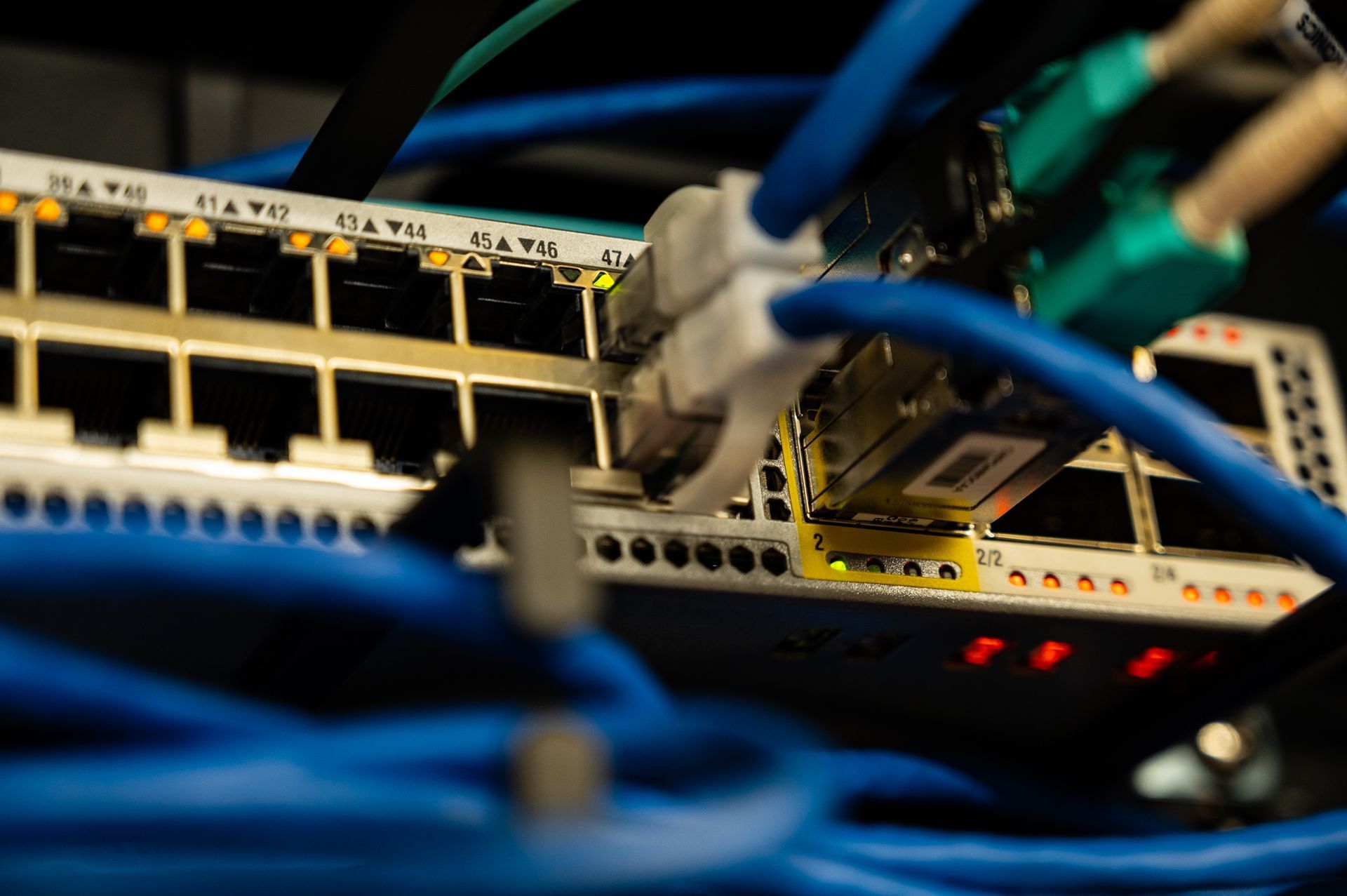
Business firewall protection: blue ethernet cables connected to a network switch behind a firewall
By santhosh V • November 25, 2026
How do you choose business firewall protection? Compare next gen firewall features, sizing and managed firewall services so your network stays protected.
Managed security services: server racks in a blue-lit network room monitored around the clock
By santhosh V • November 25, 2026
What managed security services does a small business actually need? Compare SOC monitoring, managed SIEM and firewall oversight, and see what to ask a provider.
Cybersecurity consulting services: network switch with patch cables reviewed in an assessment
By santhosh V • November 25, 2026
When should your business hire cybersecurity consulting services? Learn the triggers, what a real assessment covers and how to compare security providers.
Cloud network security solutions: rows of servers with green status lights in a cloud data center
By santhosh V • November 25, 2026
How do cloud network security solutions protect business data? Learn how zero trust, secure remote access and cloud app controls keep users and files safe.

SonicWall license renewal: renewal date circled in red on a desk calendar
By santhosh V • November 25, 2026
What happens if a SonicWall license renewal is missed? Learn which security services stop, how to track renewal dates and when managed firewall services help.

Secure remote access for employees: a remote worker typing on a laptop from home
By santhosh V • November 25, 2026
Is a VPN still enough? Learn how secure remote access for employees works, how zero trust differs and how to protect remote and hybrid teams nationwide.

24/7 SOC monitoring services: analyst watching a wall of monitoring screens in an operations center
By santhosh V • November 25, 2026
What happens after a security alert? See how 24/7 SOC monitoring services triage, classify and respond to threats for businesses across the United States.

Email security for Microsoft 365: employee typing on a laptop while reviewing business email
By santhosh V • November 25, 2026
Is built-in protection enough, or do you need email security for Microsoft 365? Learn how phishing and BEC get through and which added layers stop them.

MDR endpoint protection: business professional working on a laptop protected by managed detection
By santhosh V • November 25, 2026
Does your business need MDR endpoint protection or is antivirus enough? Compare detection, response and 24/7 monitoring, and see who benefits most from MDR.

November 3, 2026
Unifying endpoint protection with a next-generation firewall closes the dangerous visibility gap between your external network boundary and internal user devices. When edge firewalls and endpoint agents share threat intelligence in real time, suspicious activity detected on a laptop instantly informs network traffic filtering, and perimeter blocks immediately trigger device-level quarantines. This coordinated defense halts lateral movement, stops encrypted malware, and prevents breaches from spreading across your organization. During National Cybersecurity Awareness Month this October, organizations must confront a hard reality: standalone security tools operating in isolation leave critical blind spots. Traditional security models treat the network edge and user workstations as separate territories. Modern cyber threats bypass these isolated checkpoints with ease. Phishing emails deliver malicious payloads directly to employee inboxes, remote laptops connect to unsecured off-site Wi-Fi, and encrypted web traffic hides sophisticated malware from basic inspection tools. Connecting your perimeter security directly with endpoint telemetry builds a resilient, automated defense system. Here is how bridging next-generation firewalls and advanced endpoint protection transforms your security posture into an active, unified barrier. Why Are Isolated Security Tools Failing Modern Networks? Isolated security tools fail because they lack synchronized context, allowing modern multistage cyber attacks to slip through disconnected visibility silos. A perimeter firewall operating without endpoint awareness cannot determine if an internal laptop is executing unauthorized scripts. Similarly, an endpoint agent operating without network telemetry cannot see broader reconnaissance scanning across the subnet. In a traditional setup, your firewall inspects packets entering or leaving the physical building, while individual antivirus programs run on local computers. When an employee opens an infected attachment on a laptop at home and later connects to the office network, the edge firewall sees only legitimate internal traffic. Because the tools do not talk to each other, response times stretch from seconds into hours. Attackers exploit this delay to establish persistence, move laterally between systems, and harvest administrative credentials. Modern threats require rapid correlation. If an endpoint agent discovers a suspicious zero-day executable attempting to modify system registries, your network hardware must know about it instantly. Unifying these technologies eliminates manual triage handoffs and closes the window of opportunity that cybercriminals rely on to compromise business networks. How Does a Next Gen Firewall Strengthen Perimeter Security? A next-generation firewall strengthens your network edge by inspecting application traffic and decrypting data streams to block zero-day threats before they reach user devices. Unlike legacy stateful firewalls that only check basic port numbers and IP addresses, advanced firewalls conduct deep packet inspection across every incoming and outgoing connection. Our managed firewall solutions deliver comprehensive packet inspection, intrusion prevention systems, and TLS and SSL encrypted traffic analysis. With more than ninety percent of web traffic now encrypted, cyber threats routinely hide inside standard HTTPS connections. A modern firewall decrypts, inspects, and re-encrypts this traffic at line speed, catching hidden malware and blocking command-and-control communications. Furthermore, integrating cloud sandboxing through SonicWall Capture Advanced Threat Protection allows the firewall to hold unknown files at the gateway. The suspicious file detonates safely in a multi-engine cloud sandbox, analyzing its behavior before delivering it to the end user. This perimeter defense keeps malicious code off your workstations entirely, reducing the volume of alerts your endpoint tools must handle.

Show More