Unifying Endpoint Protection and Next Gen Firewall Defense
| Ask This | A Good Answer Sounds Like | A Warning Sign Sounds Like |
|---|---|---|
| What will you look at first? | Traffic, access rules, backups and license state | A product demo before any questions |
| What do we already own that works? | A list of what stays and why | Everything needs replacing |
| Who watches this out of hours? | Named coverage hours and a response commitment | The dashboard will alert you |
| How will we know it worked? | A monthly report of what patched and what was blocked | You will feel more secure |
| Can we take the plan elsewhere? | Yes, the assessment is yours | The plan only works with our contract |
| Who does the work on site? | Named local engineers who can attend | Everything is handled remotely, always |
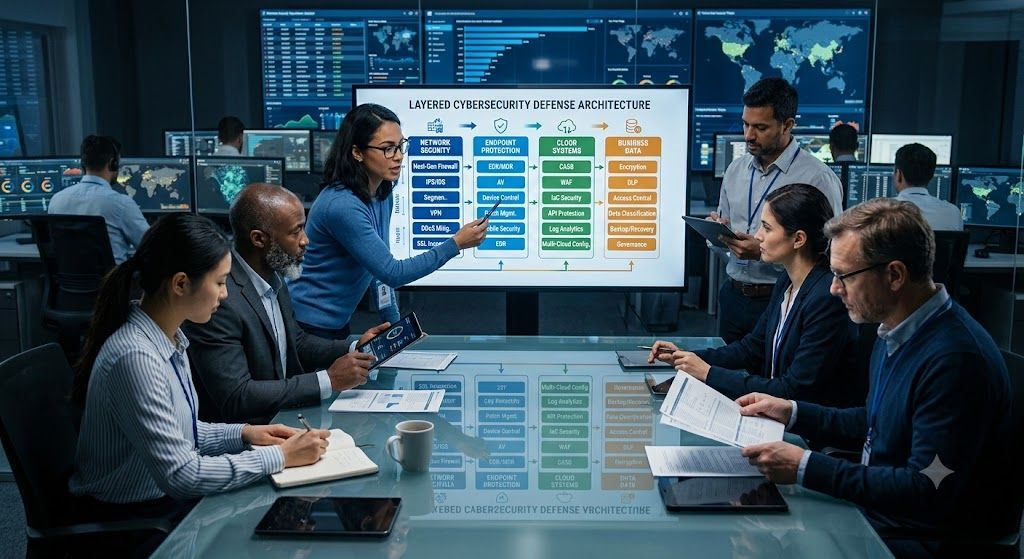
Unifying endpoint protection with a next-generation firewall closes the dangerous visibility gap between your external network boundary and internal user devices. When edge firewalls and endpoint agents share threat intelligence in real time, suspicious activity detected on a laptop instantly informs network traffic filtering, and perimeter blocks immediately trigger device-level quarantines. This coordinated defense halts lateral movement, stops encrypted malware, and prevents breaches from spreading across your organization.
During National Cybersecurity Awareness Month this October, organizations must confront a hard reality: standalone security tools operating in isolation leave critical blind spots. Traditional security models treat the network edge and user workstations as separate territories. Modern cyber threats bypass these isolated checkpoints with ease. Phishing emails deliver malicious payloads directly to employee inboxes, remote laptops connect to unsecured off-site Wi-Fi, and encrypted web traffic hides sophisticated malware from basic inspection tools.
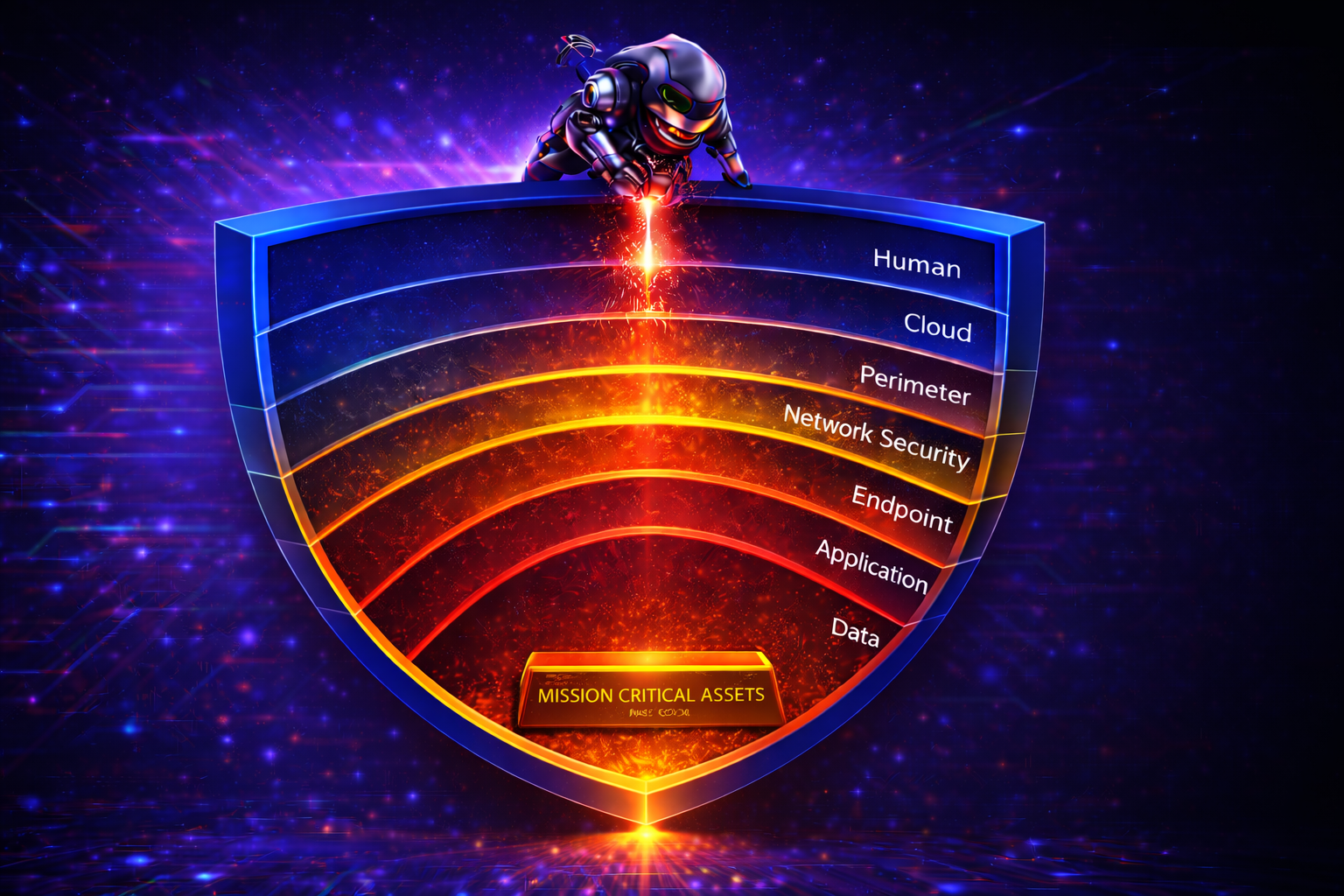
Connecting your perimeter security directly with endpoint telemetry builds a resilient, automated defense system. Here is how bridging next-generation firewalls and advanced endpoint protection transforms your security posture into an active, unified barrier.
Why Are Isolated Security Tools Failing Modern Networks?
Isolated security tools fail because they lack synchronized context, allowing modern multistage cyber attacks to slip through disconnected visibility silos. A perimeter firewall operating without endpoint awareness cannot determine if an internal laptop is executing unauthorized scripts. Similarly, an endpoint agent operating without network telemetry cannot see broader reconnaissance scanning across the subnet.
In a traditional setup, your firewall inspects packets entering or leaving the physical building, while individual antivirus programs run on local computers. When an employee opens an infected attachment on a laptop at home and later connects to the office network, the edge firewall sees only legitimate internal traffic. Because the tools do not talk to each other, response times stretch from seconds into hours. Attackers exploit this delay to establish persistence, move laterally between systems, and harvest administrative credentials.
Modern threats require rapid correlation. If an endpoint agent discovers a suspicious zero-day executable attempting to modify system registries, your network hardware must know about it instantly. Unifying these technologies eliminates manual triage handoffs and closes the window of opportunity that cybercriminals rely on to compromise business networks.
How Does a Next Gen Firewall Strengthen Perimeter Security?
A next-generation firewall strengthens your network edge by inspecting application traffic and decrypting data streams to block zero-day threats before they reach user devices. Unlike legacy stateful firewalls that only check basic port numbers and IP addresses, advanced firewalls conduct deep packet inspection across every incoming and outgoing connection.
Our managed firewall solutions deliver comprehensive packet inspection, intrusion prevention systems, and TLS and SSL encrypted traffic analysis. With more than ninety percent of web traffic now encrypted, cyber threats routinely hide inside standard HTTPS connections. A modern firewall decrypts, inspects, and re-encrypts this traffic at line speed, catching hidden malware and blocking command-and-control communications.
Furthermore, integrating cloud sandboxing through SonicWall Capture Advanced Threat Protection allows the firewall to hold unknown files at the gateway. The suspicious file detonates safely in a multi-engine cloud sandbox, analyzing its behavior before delivering it to the end user. This perimeter defense keeps malicious code off your workstations entirely, reducing the volume of alerts your endpoint tools must handle.

What Role Does Endpoint Detection Play Across Distributed Devices?
Endpoint detection monitors internal device processes, user behaviors, and system memory to stop malicious code that bypasses network boundaries. Laptops, desktops, and mobile devices represent the most targeted entry points for ransomware, credential harvesting, and phishing attacks.
Modern endpoint defense goes far beyond legacy static antivirus definitions. By deploying artificial intelligence agents such as SentinelOne and CrowdStrike Falcon, endpoint protection analyzes process behaviors in real time. If a malicious script attempts to run a fileless PowerShell command or alter local boot records, the endpoint agent detects the abnormal pattern immediately.
Key capabilities of modern endpoint protection include:
- Autonomous behavior monitoring that detects living-off-the-land techniques and unauthorized script execution.
- Automated device isolation that cuts off network access for compromised computers within milliseconds.
- One-click file rollback that reverses unauthorized file encryption and restores data without system downtime.
- Memory and process inspection that identifies in-memory code injection and credential dumping attempts.
- Continuous telemetry collection that feeds detailed forensic data directly to security analysts.
By monitoring device health both on-premises and off-site, endpoint protection ensures that remote staff and mobile workers remain secure wherever they work.
How Do Firewalls and Endpoint Tools Share Real-Time Threat Intelligence?
Firewalls and endpoint agents share threat intelligence through automated API integrations, synchronized telemetry, and centralized management consoles that trigger instant cross-platform responses. When one layer encounters an indicator of compromise, it broadcasts that signature across the entire defense architecture.
Consider what happens during a coordinated malware outbreak. An employee clicks a phishing link that attempts to download a malicious payload. If the endpoint agent catches the download, it terminates the process and shares the source domain and hash with the firewall. The firewall immediately adds that destination to its global blocklist, stopping every other device on the network from accessing the same malicious server.
Conversely, if the perimeter firewall detects an internal device attempting to communicate with a known botnet command-and-control server, it blocks the external session and notifies the endpoint manager. The endpoint system automatically forces a high-priority scan, quarantines the affected application, and revokes local network privileges. Our network security services configure these automated communication handshakes so your hardware and software defend your business as a unified team.
Why Is Network Segmentation Essential for Device Isolation?
Network segmentation divides your overall infrastructure into isolated subnets and virtual local area networks, preventing compromised endpoints from accessing sensitive internal servers. Without proper segmentation, a single infected workstation can scan the entire subnet and infect every connected machine.
In educational institutions, public libraries, and growing businesses, networks host a wide variety of users and hardware. Students, visitors, administrative staff, and point-of-sale devices should never share the same network segment. By enforcing strict virtual local area network boundaries and granular access rules through managed switches and secure wireless access points, you contain security incidents to their origin point.
Proper network segmentation delivers critical operational safeguards:
- Guest and public Wi-Fi networks stay completely separated from administrative records and internal databases.
- Internet of Things devices like security cameras and smart printers operate in restricted sandboxes without access to accounting computers.
- Point-of-sale systems and payment terminals remain isolated in dedicated compliance zones.
- Lateral movement is blocked at the switch level, preventing ransomware from jumping between office desks.
- Access policies enforce least-privilege standards, ensuring devices only communicate with authorized network services.
By combining segmentation with unified endpoint controls, security teams can isolate an infected computer from the company intranet while preserving its cloud management connection for remote remediation.
What Are Common Traps When Managing Separate Security Vendors?
Managing disconnected security tools from separate vendors creates alert fatigue, leaves unpatched configuration gaps, and slows down incident response during critical breaches. When IT teams must log into five different administrative portals to investigate a single security event, critical details get missed.
Common pitfalls of fragmented security architectures include:
- Security subscription lapses where licenses expire quietly, leaving hardware running without active threat signatures.
- Conflicting firewall and endpoint policies that accidentally block legitimate business applications while permitting risky traffic.
- Blind spots created by uninspected encrypted traffic when firewall processing capacity cannot handle full SSL decryption.
- Excessive false positives that overwhelm internal staff, causing real alerts to go unaddressed for days.
- Incompatible logs and data formats that prevent fast correlation across different management dashboards.
Consolidating your security stack under a unified management framework resolves these friction points. Centralized platforms such as SonicWall Network Security Manager give your administrators complete visibility over firewalls, switches, and access points from a single dashboard.
How Does 24/7 SOC Oversight Complete Your Security Stack?
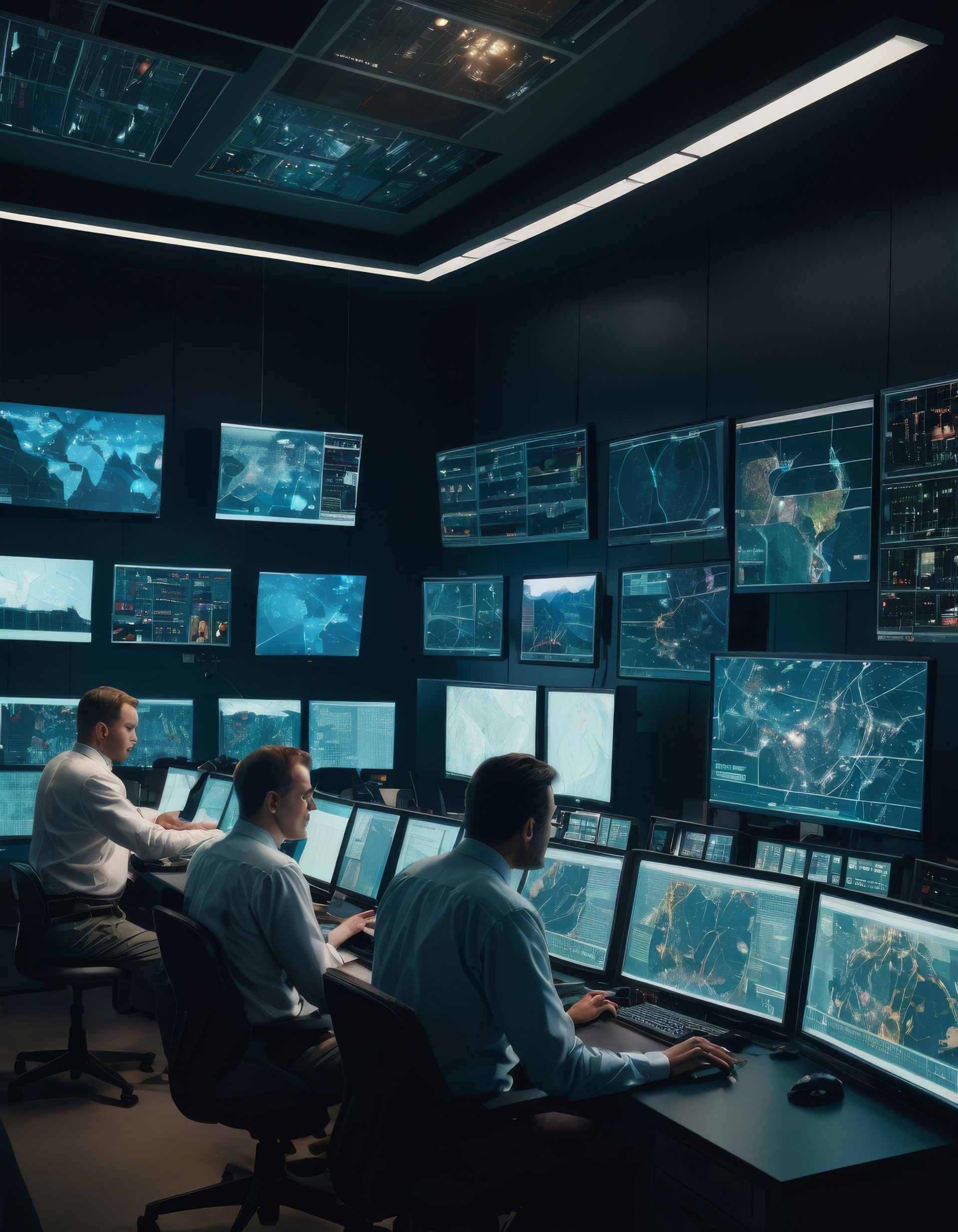
Round-the-clock Security Operations Center oversight adds active human threat hunting and automated log correlation to your combined firewall and endpoint infrastructure. Technology alone cannot stop determined human adversaries who use legitimate administrative tools to navigate corporate networks.
Our dedicated SOC and SIEM services provide continuous monitoring powered by certified security analysts and advanced machine learning. By aggregating telemetry from your edge firewalls, switches, laptops, and cloud applications, our security operations team correlates seemingly unrelated events into a clear incident timeline.
If an alert triggers in the middle of the night, our analysts immediately investigate the threat, distinguish false alarms from true incidents, and take guided remediation actions. This proactive approach stops lateral movement, protects your sensitive data, and ensures compliance with industry standards without burdening your internal staff.
Frequently Asked Questions
Why is traditional antivirus not enough when I already have a firewall?
Traditional antivirus relies on static signature files that only recognize previously identified malware. Modern cyber attacks use fileless scripts, memory exploits, and polymorphic code that bypass signature scanning entirely. Pairing advanced behavioral endpoint protection with a next-generation firewall provides active inspection for both network traffic and local device memory.
What happens when an employee takes a company laptop off the office network?
When a company laptop leaves the physical office, it no longer benefits from on-premises firewall inspection. Modern endpoint agents maintain active behavioral defense on the device wherever it connects, while cloud secure edge tools route web traffic through cloud-hosted security policies to preserve continuous protection.
How does unified security help schools and educational networks?
Educational networks support hundreds of personal student devices, public workstations, and administrative databases on shared campus infrastructure. Unifying endpoint protection with next-generation firewalls allows school administrators to filter inappropriate content, enforce safe browsing policies, and prevent student devices from compromising district records.
How long does it take to integrate firewalls with endpoint protection?
A standard deployment and policy synchronization project typically takes from a few hours to a couple of days, depending on network size and device count. Professional configuration ensures that traffic auditing, policy rules, and automated quarantine triggers are tested thoroughly to avoid any disruption to daily business operations.
Summary
Unifying your endpoint protection and next-generation firewall creates a synchronized defense that eliminates security blind spots and automates threat response. By connecting perimeter deep packet inspection with device-level behavioral intelligence, organizations prevent lateral movement and block evasive zero-day malware. Adding network segmentation and continuous monitoring ensures that every workstation, switch, and cloud service remains secure against evolving cyber threats.
At
PCs2U, Inc., we deliver comprehensive cybersecurity solutions and Platinum SonicWall partner expertise with personalized concierge service. Based in Helotes, Texas, our experienced team configures, monitors, and manages high-performance firewalls, advanced endpoint protection, and 24/7 SOC oversight for businesses, schools, and libraries across Helotes and surrounding communities. To evaluate your current network defenses and build a unified security strategy, visit our
contact page or call our local team today at (210) 465-1604.
Recent Posts